Joins the R.A.A.F.
Ken enlisted in the R.A.A.F. early in 1942, and after training at No. 2 Bombing and Gunnery School at Port Pirie, South Australia, graduated as a Sergeant Air Gunner on 1 March 1943.
Flying in the isolated, highly vulnerable tail gun turret of a Halifax bomber, Ken Oakes completed an extended tour of forty operational sorties over Germany, France and Belgium — against odds that, statistically, should have caught up with him at least four times over.
Ken enlisted in the R.A.A.F. early in 1942, and after training at No. 2 Bombing and Gunnery School at Port Pirie, South Australia, graduated as a Sergeant Air Gunner on 1 March 1943.
As his daughter Sue recounts it: when Ken embarked for England, he left on what he described as a “tramp steamer” across the Pacific. About 80 air gunners were aboard; roughly 30 of that group would return to Australia after the war. He landed in the USA and travelled across the country by train, the journey ending in New York, where he had a few days to see the sights.
There he palled up with another RAAF fellow, and while the two of them were resting on a park bench, an older woman approached and asked if they were servicemen. After they told her a little about themselves, she invited them both back to her apartment to meet her husband and have lunch. Ken said the apartment was very nice — quite a change for a farm lad. The couple were Jewish and had fled Germany before the war; the husband had been savagely beaten during Kristallnacht and could no longer use his arms, so his wife had to cut his food and feed him. Ken and his mate spent a pleasant afternoon with them, chatting about Australia and life back home.
After a short time in the USA, Ken embarked on another sea voyage and landed at Gourock, Scotland, then travelled by train to London overnight with the whole country in blackout, and on from London to Yorkshire for further training.
Ken embarked for the United Kingdom the following month and, after further training there, was posted to No. 466 R.A.A.F. Halifax Squadron, serving with R.A.F. Bomber Command. His place in the all-Australian aircrew was the highly vulnerable and isolated tail gun turret.
While still with No. 27 Operational Training Unit, Ken flew his first sortie of genuine operational character on the night of 21 September 1943: a leaflet-dropping “Nickel” operation, Lichfield–Etampes–Base, logged at 8 hours 50 minutes and noted in the log book as successful. This predates his posting to an operational squadron by more than three months.
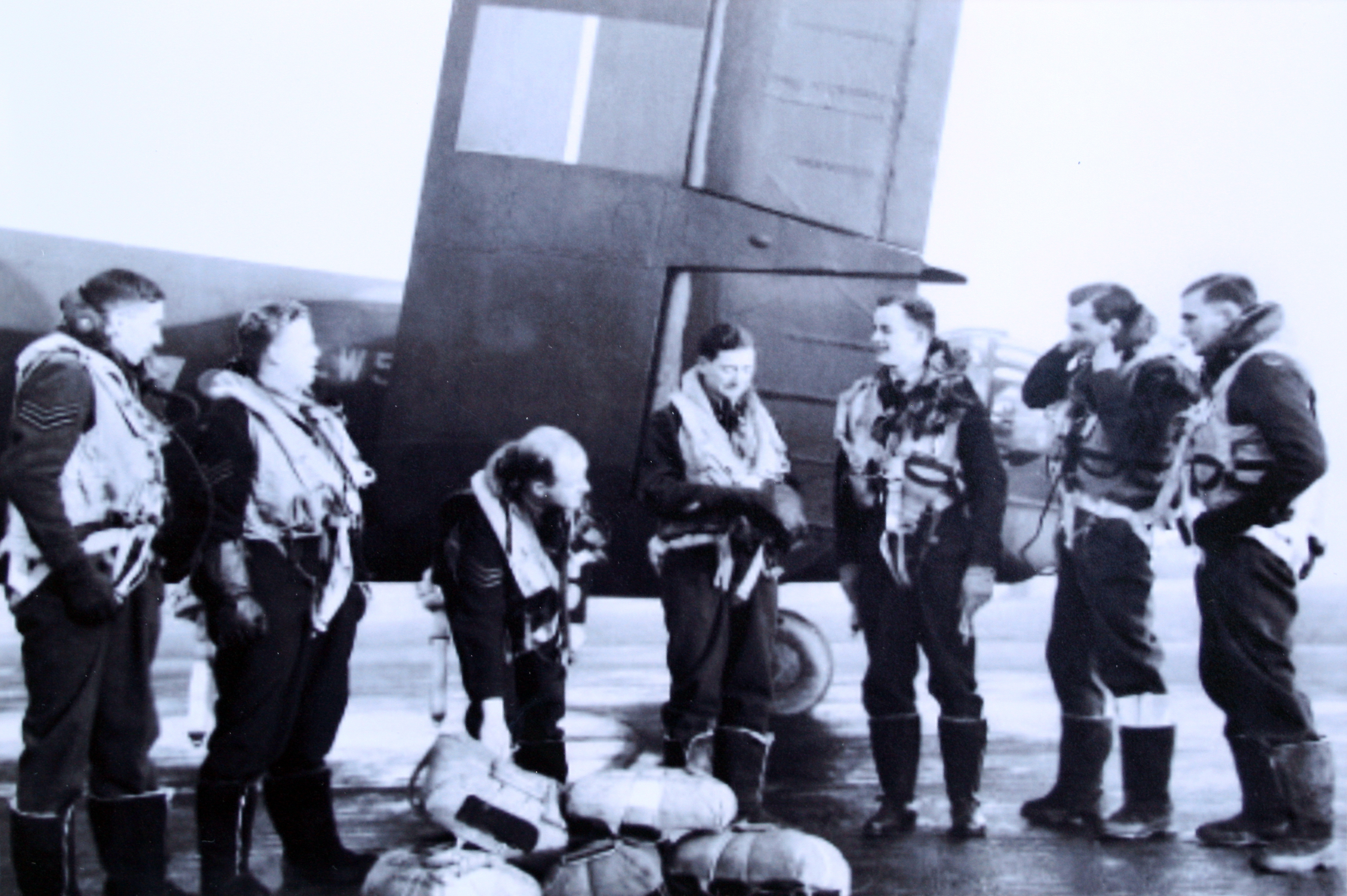
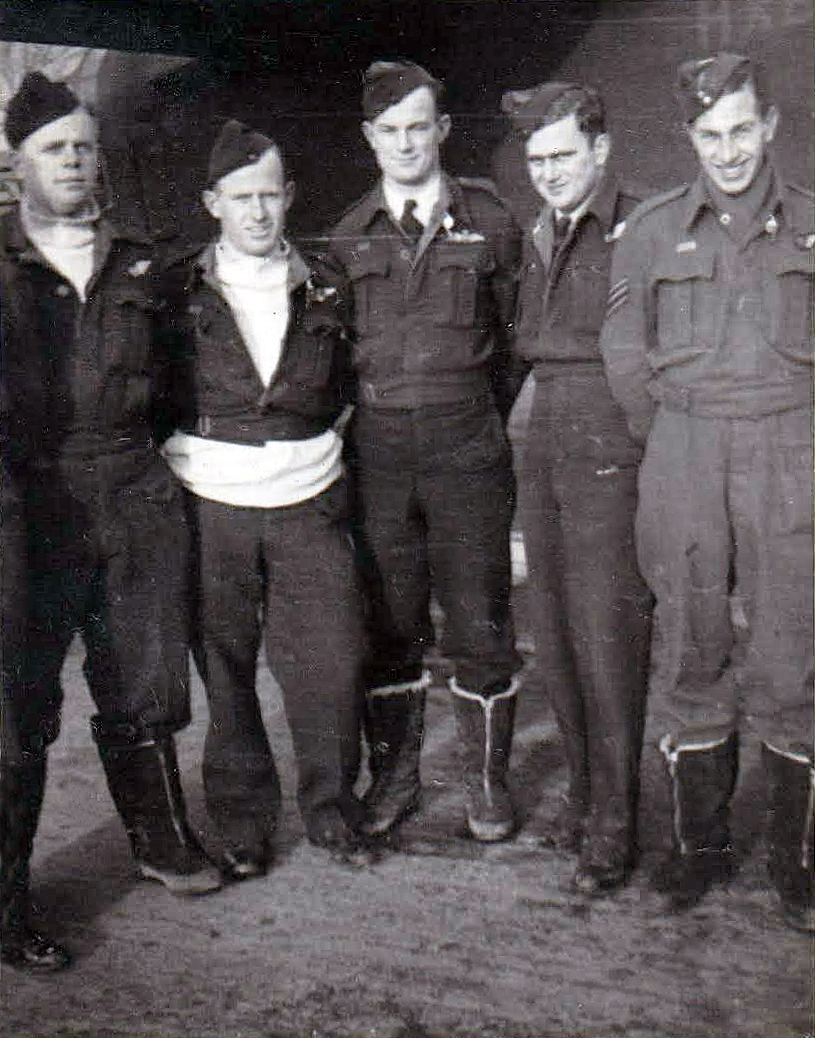
Flying in the tail turret, Ken successfully completed an extended tour of forty (40) operational sorties to targets in Germany, France and Belgium, including raids on Berlin. As an aerial gunner he was one of a breed of young men whom the world had never seen before and would never see again.
Ken flew on the disastrous raid to Nuremberg on 30 March 1944, when, in a few hours, Bomber Command suffered the crippling loss of 94 heavy bombers and 700 highly trained airmen — one of the costliest single nights of the entire bombing campaign.
466 Squadron was heavily committed to the destruction of the flying bomb and rocket sites in France and Belgium, in a sustained attempt to prevent the devastation of southern England by these missiles. Bomber Command sustained casualties throughout the war far greater than any comparable force in history, averaging a loss rate of about 10% per sortie — a statistic that, over Ken's forty operations, would have caught up with him at least four times.
In all, Ken served in the R.A.A.F. for over four years, firstly as an aircrew trainee, then as an operational air gunner, and finally as a gunnery instructor. At the termination of his service in 1946 he held the rank of Flying Officer, having been commissioned in the field during his operational service.
Ken — in full, Kenneth Stanley Oakes — died of a heart attack on 25 July 1980. His widow, Helen Annette Oakes, subsequently applied to the Repatriation Board for a War Widow’s Pension; the statement supporting her claim, reproduced below, is one of the fullest surviving accounts of Ken’s wartime service.
“In the words of the Commander of the Pathfinder Force, Air Vice Marshal Bennett: ‘The contribution of an aircrew member of Bomber Command who completed an operational tour or died in the process — measured in terms of danger of death, both in intensity and duration — was far greater than that of any other fighting men, Air Force, Navy or Army.’”
“Ken Oakes’ unique service to his country during a period of profound crisis was in itself profound.”
Just briefly, Dad volunteered to join the Australian Militia Forces first and later volunteered for the RAAF. His father didn’t want him to leave the farm and this is why we suspect that Dad aged himself by 12 months (and thus being over 18 years of age) on his attestation papers for the Australian Militia. His birth year is correct on his application to join the RAAF. We do not have any verbal family anecdotes to confirm our suspicions and the earlier year of birth could be an error.
Dad often spoke about the electrically heated suits crew wore to cope with the extreme cold in the aircraft. The suits were unreliable — prone to malfunctioning so that one part of the body might be roasting while another was freezing. Regulating the temperature was a constant struggle: if the suit ran too hot and he began to sweat, it would short out and blow a fuse. Fixing this mid-flight was awkward at best, and once it failed he’d spend the rest of the operation very cold.
Thick gloves were issued as part of the cold-weather kit, but Dad found them too clumsy for the job. He’d take them off and operate his turret and guns in thin silk gloves instead, trading warmth for the dexterity he needed. He also removed a pane of Perspex (or Plexiglas) from the turret to improve his field of vision, letting the outside air stream in directly.
Visibility brought its own problems. The Bristol Hercules engines tended to weep a bit of oil from their exhausts, and over the course of a flight this would coat the turret in grime. To see past it, he’d slide the turret screen up or down and out of his line of sight rather than try to look through the fouled glass.
Crews were on oxygen above 10,000 feet — most of any given operation. With the screen open to the outside air, condensation from his breath would freeze on the outside of his mask, slowly building into a long icicle. Every so often he’d break it off and throw it out through the open screen. It’s a small detail, but one that has stuck with Richard since he first heard it as a child.
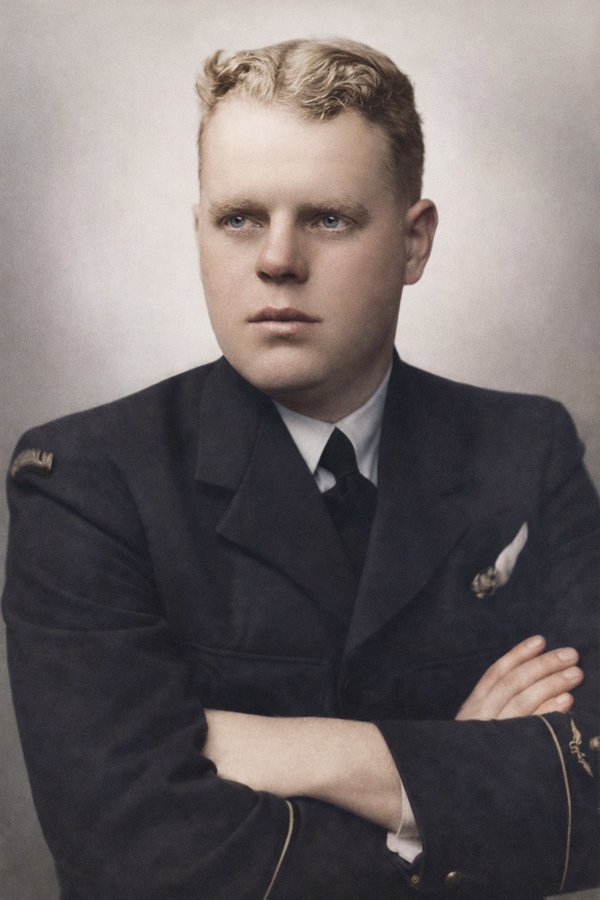
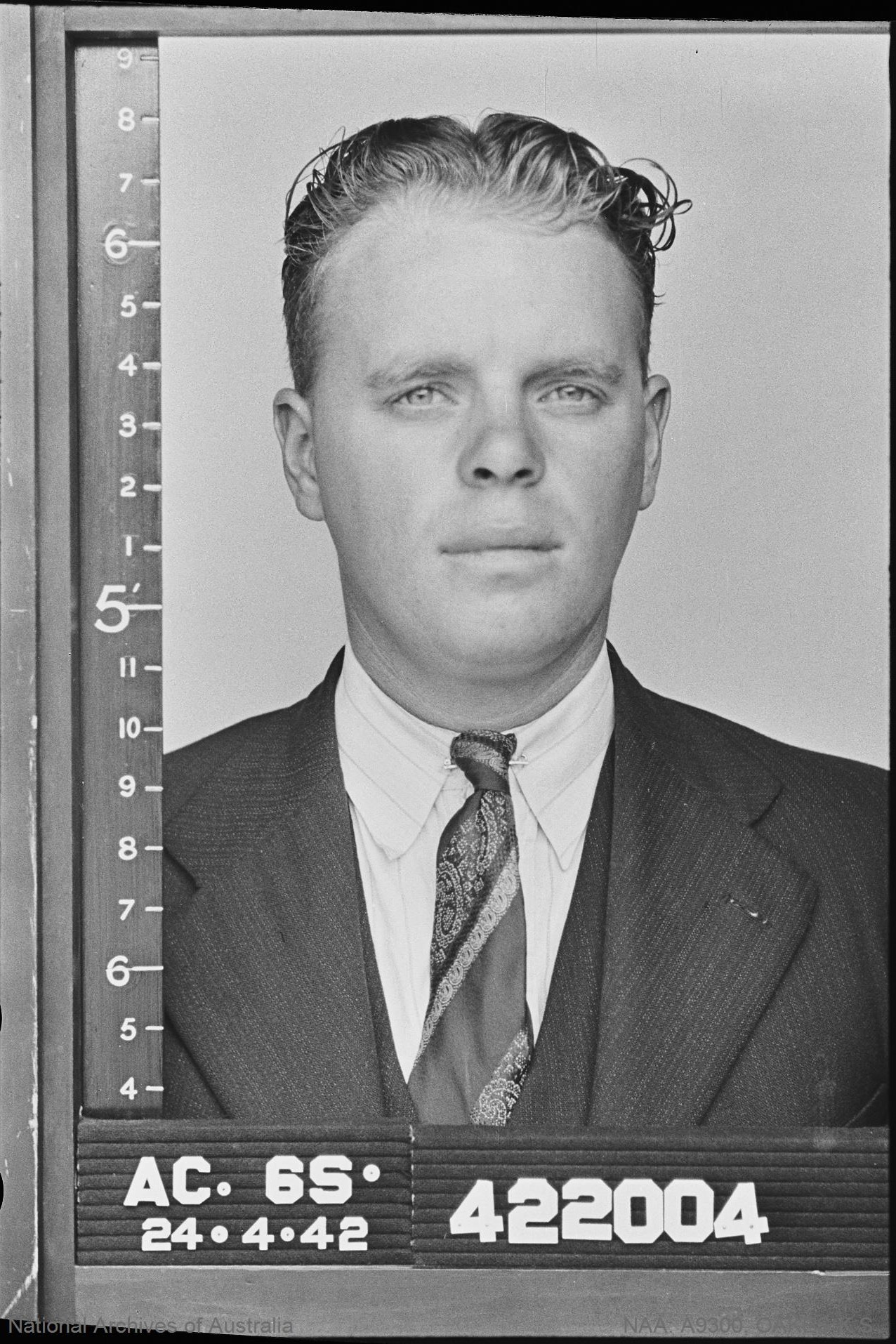
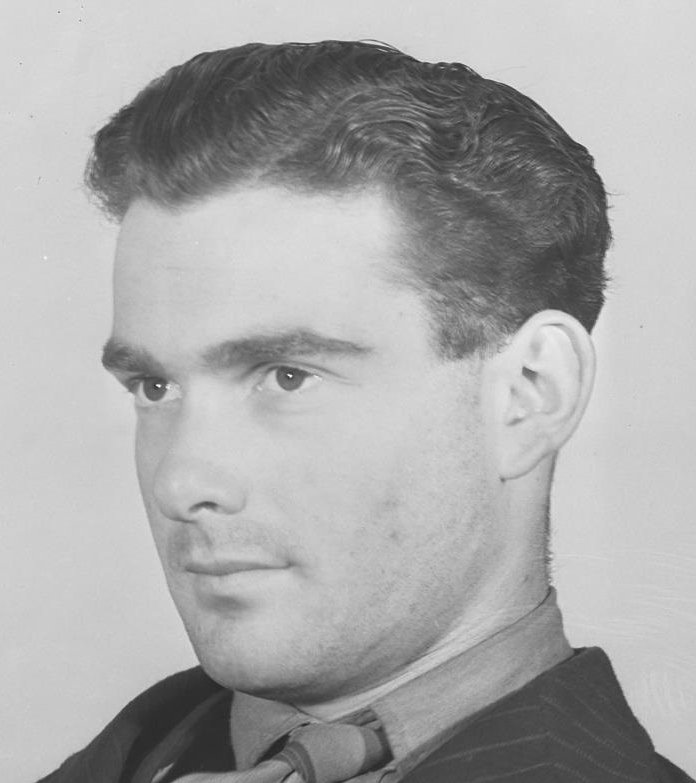
Ken Oakes — in full, Kenneth Stanley Oakes — was born on 17 June 1921, and before the war worked as an orchardist, his family’s address recorded as Farm 975, Griffith, New South Wales. He served in the 56th Battalion (Militia) from 2 February 1939 before enlisting in the R.A.A.F. at No. 2 Recruiting Centre on 24 April 1942, for the duration of the war and twelve months thereafter. He was 20 years old, single, and named his father, Thomas Benjamin Oakes, as next of kin.
Mustered Aircrew V and remustered Aircrew V(G) on 13 July 1942, Ken trained through No. 1 Initial Training School, No. 2 Wireless Air Gunnery School at Parkes, and No. 2 Bombing and Air Gunnery School at Port Pirie, remustering Air Gunner and being awarded his Air Gunner’s Badge on 4–5 March 1943. He embarked for the United Kingdom on 20 April 1943, disembarking on 3 June 1943, and proceeded via No. 11 Personnel Despatch and Reception Centre to No. 27 Operational Training Unit, Lichfield, then No. 1652 Heavy Conversion Unit, Marston Moor.
Posted to No. 466 Squadron RAAF (Bomber) at Leconfield and Driffield on 30 December 1943, Ken completed his tour of 40 sorties before returning to No. 1652 Conversion Unit as an instructor on 19 August 1944, then briefly to R/STN Marston Moor and No. 16 Air Crew Holding Unit. He embarked for home on 30 November 1945, disembarking in Melbourne on 3 January 1946, and was discharged from No. 2 Personnel Depot, Bradfield Park, on 1 March 1946.
AC2 — 24 April 1942
Leading Aircraftman — 18 July 1942
Sergeant — 4 March 1943
Flight Sergeant — 5 September 1943
Pilot Officer — 3 July 1944 (commissioned 2 July 1944)
Flying Officer — 3 January 1945
1 ITS, Somers — 24.4.42
2 WAGS, Parkes — 20.8.42
2 BAGS, Port Pirie — 6.2.43
2 ED, Bradfield Park — 5.3.43
1 ED, Ascot Vale — 31.3.43
2 ED, Bradfield Park — 16.4.43
Embarked, Brisbane — 20.4.43
Disembarked, UK — 3.6.43
11 PDRC, UK (Brighton) — 4.6.43
27 OTU, UK (Lichfield) — 22.6.43
1652 Conversion Unit, UK (Marston Moor) — 20.10.43
466 Sqn (B), UK (Leconfield, Driffield) — 30.12.43
1652 Conversion Unit, UK — 19.8.44
R/STN, UK (Marston Moor) — 30.6.45
16 ACHU, UK — 16.9.45
11 PDRC, UK — 28.9.45
Embarked, UK — 30.11.45
Disembarked, Melbourne — 3.1.46
1 PD, Ransford — 3.1.46
2 PD, Bradfield Park — 14.2.46
2 PD (discharged), Bradfield Park — 1.3.46
Written in support of Helen Annette Oakes’ application for a War Widow’s Pension following Ken’s death, this statement by his lifelong friend and fellow air gunner Jim Mallinson is one of the most detailed firsthand accounts of squadron life to survive in this collection — from the physical toll of fear and fatigue to the culture of “wakey wakey” pills and the vulnerability of exhausted crews on the final approach home.
I make this statement in support of an application by Mrs Helen Annette Oakes, widow of the late Kenneth Stanley Oakes, for a War Widow’s Pension. It is made in the firm belief that the death of Mr Oakes by heart attack on 25th July 1980 could not, in any circumstances, be entirely disassociated by reasonable persons from the deceased’s splendid and hazardous service as a tail gunner of a Halifax bomber of No. 466 (R.A.A.F.) Squadron, serving with the R.A.F. Bomber Command in World War II.
I’ve known the deceased since boyhood, met with him on a number of occasions in the U.K. in 1944, and at frequent intervals since. To our knowledge we were the only air gunners of this district to have survived the war, and that is why I feel impelled to set out these thoughts and recollections in connection with his widow’s application.
It is well established that a normal tour of duty by Bomber Command aircrew comprised thirty operations, this being the number judged by the authorities to have been the maximum that aircrew could be expected to complete and still retain reasonable mental and physical health.
I’ve had the opportunity to peruse Mr Oakes’ log book since his death, and I find that he, in fact, over a period of some six months from February 1944, took part in forty (40) operational sorties, on completion of which he served as an air gunnery instructor. He was commissioned during his tour, which included operations to the Ruhr, Berlin, and also the disastrous attack on Nuremberg on 30th March 1944, when Bomber Command suffered its heaviest losses of the war.
It may be well documented in Departmental files, but I feel words are barely adequate to describe the stress and the fear that would have been part and parcel of Mr Oakes’ wartime service. Fatigue too was an ever-present feature of squadron life. When the squadron was to fly at night the battle order was posted in the mornings; when a daylight attack was planned, it was posted the preceding evening. Most of us found that these procedures (though we realised no alternatives were available to the Commanders) made it almost impossible to get adequate rest, the anxiety — though stifled — being ever present.
It is still very clear in my mind how, possibly without exception, aircrews would urinate almost continuously for long periods before each operation, and this was undoubtedly caused by stress and nervous tension, and the anticipation of more of it to come. Crews referred to this practice as the “operational pee”, though there were other descriptions.
I remember the times of extreme fear and apprehension that Mr Oakes too must have felt, on the occasions when the aircraft came under direct attack by enemy fighters, the searchlights, the seemingly unceasing barrage of anti-aircraft fire, the requirement that the aircraft be kept “straight and level” on the run in to the target, even when one’s aircraft was itself the target of predicted flak, and all the rest of it. Quite frankly, I can’t believe that people who did not personally experience the German air defences would have any real conception of what it was like, and what effect it might have had on young men, both then and in their future lives, if they were to be spared to live at all.
I also recall the ready availability of artificial stimulants (they were called “wakey wakey” pills, but were identical with the Benzedrine tablets carried in our escape kits). Gunners in particular were “invited” to take them prior to take-off in order to maintain a constant state of alertness for hours on end over enemy territory, and more particularly when returning from night operations to our airfields, which were on occasion the object of attention by German “intruders” whose function was to attack the returning bombers when most vulnerable in their landing approach, and their crews mentally and physically exhausted.
It is when one remembers the fear, the stresses and strains, the fatigue and the fright of those times, it occurs to me that the focal point of that fear and stress was the heart itself. In fact it would seem that the heart spent a lot of its time in one’s throat rather than where it was supposed to be. There must be little doubt that such prolonged periods of stress and tension did in fact have a deleterious effect on that vital organ. Can it be said categorically that Ken Oakes’ service experiences could not have affected the long-term functioning of his heart; that they did not in fact cause the forfeiture of a good ten years of his life?
On this point, did not the Federal Government introduce the Service Pension at age 60 for World War I Diggers for the given reason that the hardship and stress occasioned by their service in the line had limited their potential life span relative to others?
So far as Mrs Oakes is aware, her late husband, though eligible under the War Service Land Settlement schemes and various other forms of assistance, chose to repatriate himself. He asked nothing of the Australian people in return for the effort he had put in for them, this attitude being characteristic of the man.
I sincerely trust that this honourable characteristic, which bade him not to seek Repatriation benefits for many years, shall not be used as an argument to deny the legitimate claim of his widow.
Yours faithfully,